






AI-powered predictive analytics is rapidly becoming the cornerstone for enhancing business efficiency across the globe, with India emerging as a particular hotspot for adoption and innovation. From the viewpoint of the PHD Chamber of Commerce and Industry (PHDCCI), predictive analytics represents not just a technology upgrade but a transformative force fueling India’s digital economy. This comprehensive article explores current market trends, the strategic role of PHDCCI, real-world applications, implementation tactics, emerging challenges, and future outlook for predictive analytics in the Indian business context.
The Evolution of Predictive Analytics in Indian Business
Predictive analytics uses AI algorithms and machine learning techniques to analyze historical and real-time data, forecasting likely trends and enabling companies to act proactively. This data-driven approach replaces intuitive decision-making with scientific precision.
India’s fast-paced digital transformation has paved the way for widespread adoption of these technologies. The PHD Chamber of Commerce and Industry has consistently advocated for AI integration, as evidenced by its November 2025 workshop, “AI Tools for Everyday Business.” Here, delegates from 50 varied sectors gathered to explore how predictive analytics and AI can tangibly boost productivity.
India’s AI market is projected to reach approximately $7.84 billion in 2025, with predictive analytics a central pillar of this growth. This evolution is affecting industries ranging from manufacturing and finance to retail and healthcare, supporting operational agility and competitive advantage.
By harnessing AI-driven insights, businesses are moving away from reactive decisions and embracing predictive, data-backed planning. This transition is particularly relevant as Indian enterprises navigate unprecedented complexity in supply chains, consumer behavior, and regulatory environments.
Market Growth and Adoption Trends: An Indian Perspective
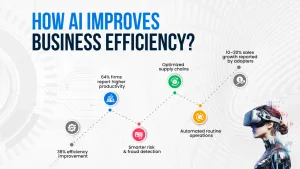
India’s predictive analytics market, valued at about $1.12 billion in 2024, is forecasted to soar to nearly $6.87 billion by 2033, growing at a 20.4% CAGR. Globally, 55% of businesses have adopted predictive analytics tools, reporting improvements in productivity (48%) and efficiency (38%).
Government-backed initiatives significantly accelerate adoption in India. In 2025, the Indian government allocated INR 500 crore to develop AI Centres of Excellence focusing on agriculture, healthcare, and sustainable urban projects, designed to support MSMEs in embracing AI-based predictive technologies.
PHDCCI furthers this mission through its Centre of Excellence in AI and Robotics, a joint venture with AICRA. The center promotes collaboration between industry and academia, offering training aimed at democratizing AI access, especially for smaller manufacturers and service providers.
India’s unique socio-economic landscape positions predictive analytics as a prime enabler of development goals beyond mere business efficiency — from improving crop yields for small farmers to optimizing healthcare delivery in rural areas. This inclusive potential increases enthusiasm for AI adoption across sectors.
The momentum is also driven by a rise in AI adoption culture, where Indian organizations investing in AI see it less as a cost and more as a strategic asset to future-proof their businesses. According to PHDCCI research, about 74% of Indian enterprises now use AI-powered predictive analytics in their decision-making processes.
Deep Dive into Sector-Specific Adoption
While predictive analytics is gaining traction broadly, sector-specific adoption patterns reveal nuanced benefits:
- Manufacturing: Predictive maintenance reduces equipment downtime by up to 50%, minimizing production losses and maintenance costs. This is crucial for India’s growing manufacturing sector, where downtime has traditionally been a major bottleneck.
- Finance: Banks employ AI to detect fraud early, with data indicating fraud loss reductions by as much as 50%. AI-powered chatbots and avatars, such as those deployed by RBL Bank, boost both customer service and operational efficiency.
- Retail and E-commerce: Amazon’s model demonstrates that personalized product recommendations, powered by predictive analytics, can contribute up to 35% of overall revenue, reduce stockouts by 20-30%, and elevate sales by 10-15%. Such strategies are increasingly adopted by Indian retailers looking to enhance customer loyalty and inventory management.
- Agriculture: Emerging AI tools predict crop yields and weather impacts, helping farmers optimize planting and harvesting schedules, facilitated by government AI centres focusing on agriculture.
- Healthcare: Predictive analytics supports early disease detection and resource allocation, vastly improving patient outcomes and reducing costs in hospitals and clinics.
This sectoral breakdown illustrates the wide-ranging impact of predictive analytics, aligning with India’s economic diversification and digital inclusion goals.
Key Benefits for Business Efficiency
Predictive analytics transforms business efficiency in several critical ways:
- Enhanced Decision-Making: Businesses gain actionable foresight from data patterns, enabling intelligent business strategies that drive growth and resilience.
- Productivity Improvement: Studies show efficiency gains of up to 38%, with 64% of firms reporting productivity enhancements due to AI adoption.
- Improved Risk Management: Early anomaly detection is vital for fraud prevention and quality control, significantly reducing losses and reputational risks.
- Supply Chain Optimization: Walmart’s use of predictive demand forecasting has cut supply chain costs by 25%, an example PHDCCI promotes among Indian SMEs aiming for scalable cost savings.
- Automation of Routine Processes: AI handles repetitive tasks such as HR management and invoicing, cutting errors and operational expenses, which is especially valuable for MSMEs with limited resources.
- Financial Performance Gains: Over half of organizations leveraging predictive analytics report a 10-20% increase in sales and 10-15% reduction in inventory-related costs.
These benefits collectively help businesses reduce operational friction, enhance customer satisfaction, and improve profitability.
Real-World Case Studies Demonstrating Impact
The effectiveness of predictive analytics is evident from multiple high-profile global and Indian case studies:
- Amazon: Utilizes predictive analytics to generate personalized recommendations accounting for roughly 35% of revenue, while simultaneously reducing stockouts and boosting sales.
- JPMorgan Chase: AI-powered cloud-based anomaly detection systems have halved the bank’s fraud losses, improving financial security.
- Netflix: Advanced AI-driven content predictions allowed Netflix to retain 10% more customers, illustrating potential applicability for Indian digital service providers.
Moreover, PHDCCI workshops provide hands-on experience in predictive maintenance and demand forecasting, with manufacturing firms reporting up to a 50% cut in downtime and retailers improving inventory turnaround times. These case studies not only validate the technology but also inspire smaller businesses to pursue adoption aggressively.
PHDCCI’s Strategic Role in AI and Predictive Analytics Adoption
PHDCCI plays an indispensable role in accelerating AI and predictive analytics deployment across Indian enterprises:
- Establishing the Centre of Excellence in AI and Robotics with AICRA to build technical capabilities through training, research, and pilot projects.
- Organizing workshops and seminars to educate MSMEs and corporates on practical AI applications and benefits.
- Delivering consulting services that help businesses tailor AI integration strategies according to their unique operational contexts.
The November 2025 workshop held at PHD House epitomized PHDCCI’s vision of AI as a foundational business capability. The event equipped industry leaders with creative AI tools and efficiency frameworks, emphasizing AI as a business imperative in line with national digitalization priorities.
PHDCCI’s approach is holistic — encouraging ethical AI use, fostering partnerships between academia and industry, and facilitating policy dialogues to ensure inclusive tech growth.
Challenges and Solutions in Implementation
Despite the clear benefits, there are significant challenges to scaling AI-driven predictive analytics in India:
- Data Quality and Availability: Many Indian enterprises, especially MSMEs, struggle with fragmented or incomplete data, which undermines predictive model accuracy.
- Skill Gaps: A shortage of trained data scientists and AI professionals limits rapid implementation. Addressing this, PHDCCI and AICRA run targeted courses and certifications to build local expertise.
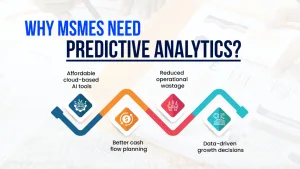
- Cost Barriers: Initial investments in AI infrastructure can be cost-prohibitive for smaller companies, making accessible cloud solutions and government support critical.
- Ethical Concerns: The risk of biased algorithms and privacy violations necessitates transparent practices, AI audits, and adherence to regulatory standards.
- Legacy IT Systems: Integration challenges arise in incorporating AI with existing enterprise systems that are often outdated.
Addressing these requires a multi-pronged approach: promoting cloud adoption (e.g., Microsoft Azure, which offers scalable predictive services and flexible payment models), enabling public-private partnerships, nurturing AI literacy through continuous reskilling, and advocating for robust AI governance frameworks.
Implementation Strategies for Indian Enterprises
To successfully implement predictive analytics, Indian enterprises should consider these strategic actions recommended by PHDCCI:
- Focus on Data Readiness: Ensuring datasets are cleaned, consistent, and integrated is foundational to accurate predictive modeling.
- Leverage Cloud Infrastructure: Cloud platforms like Microsoft Azure offer scalable, cost-efficient environments to deploy sophisticated AI models without heavy upfront investment.
- Establish Technology Partnerships: Collaborate with AI solution providers and innovators. For instance, Databricks recently invested $250 million in its Bengaluru AI platform to serve Indian enterprises.
- Invest in Workforce Development: Engage with PHDCCI and AICRA training programs to build AI capabilities in your teams, fostering ethical AI use.
- Pilot and Scale: Start with small-scale pilot projects to demonstrate value, then scale AI applications across departments or sectors.
- Measure Impact: Use KPIs including investment returns (2-5x), cost savings, customer churn reduction (5-15%), and productivity gains to monitor AI program success.
By following these steps, Indian enterprises can navigate AI challenges and unlock predictive analytics’ full potential.
Future Outlook: India’s AI and Predictive Analytics Revolution
With predictions that over 50% of global businesses will rely on AI-powered predictive analytics by 2025, India is poised for accelerated growth due to strong policy backing and ecosystem support.
The market is primed for expansive growth across sectors like sustainable urban development, precision agriculture, financial services, and digital commerce. PHDCCI’s strategic initiatives position Indian businesses to capitalize early on this wave.
Entering the AI-driven era offers a competitive edge: 42% of Indian businesses acknowledge readiness to embrace rapid changes fueled by AI innovation. Those that integrate predictive analytics into their core strategy will drive superior business outcomes and participate actively in India’s digital transformation journey.
Conclusion
AI-driven predictive analytics is no longer a futuristic concept — it is a here-and-now business imperative for India’s rapidly transforming economy. Supported by government schemes and championed by organizations like PHDCCI, predictive analytics is enabling enterprises to increase efficiency, reduce costs, manage risks, and boost revenues.
By focusing on data strategy, workforce training, ethical AI governance, and strategic collaboration, Indian businesses—particularly MSMEs—can harness the immense value of AI-powered insights. With the predictive analytics market expected to approach $7 billion by 2033, Indian enterprises stand at the cusp of a transformative opportunity to reimagine operational excellence and innovation.