






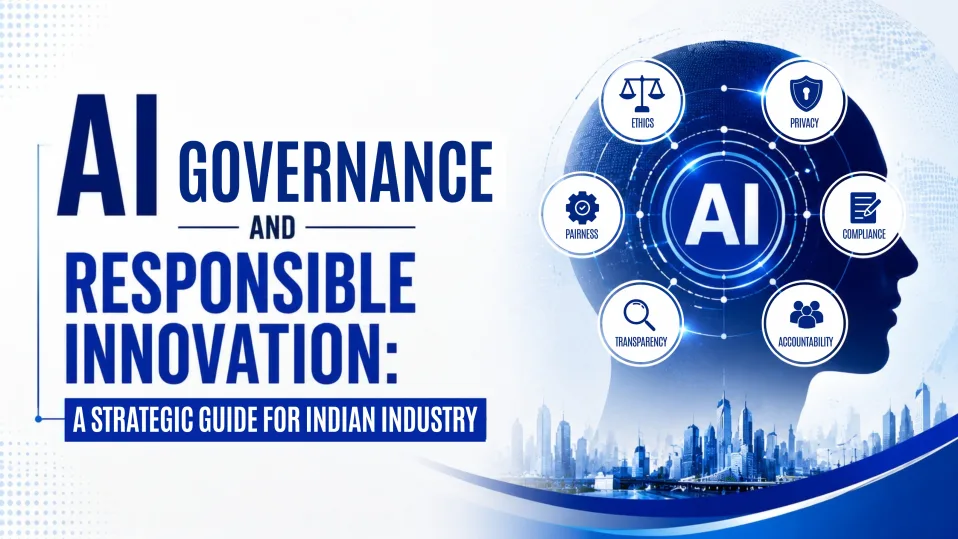
Artificial Intelligence (AI) has transitioned from an experimental capability to the fundamental substrate of modern commerce, trade, and industrial operations. As Indian industry accelerates its digital transformation, the conversation has rapidly evolved from whether organizations should adopt AI to how they can govern its deployment responsibly.
For premier trade bodies like the PHD Chamber of Commerce and Industry (PHDCCI), fostering sustainable economic growth requires a dual approach: championing cutting-edge technological innovation while building robust frameworks for corporate governance and ethical accountability. This article provides a comprehensive analysis of the current AI governance landscape, explores the strategic business case for responsible innovation, and outlines an operational blueprint for Indian enterprises- especially MSMEs- to build competitive advantage through ethical compliance.
Deep Dive Into the 2026 AI Landscape
The scale of AI integration across global markets is unprecedented. According to projections by Gartner, global AI spending is expected to reach a staggering $2.5 trillion, highlighting the technology’s role as a core driver of productivity. In India, the momentum is equally formidable. This rapid economic expansion is fueled by massive efficiency gains. The Anthropic India Country Brief: Economic Index reveals that Indian users experience an astonishing 15x productivity speedup, compressing tasks that traditionally take 3.8 hours down to just 14.8 minutes.
However, this breakneck speed of deployment has created a critical structural vulnerability: the Adoption-Governance Gap. Organizations are deploying agentic and generative systems far faster than they can implement oversight frameworks. According to the World Economic Forum and Accenture’s joint report, Advancing Responsible AI Innovation: A Playbook, fewer than 1% of organizations globally have fully operationalized responsible AI practices, leaving an overwhelming 81% stuck in the earliest maturity stages.
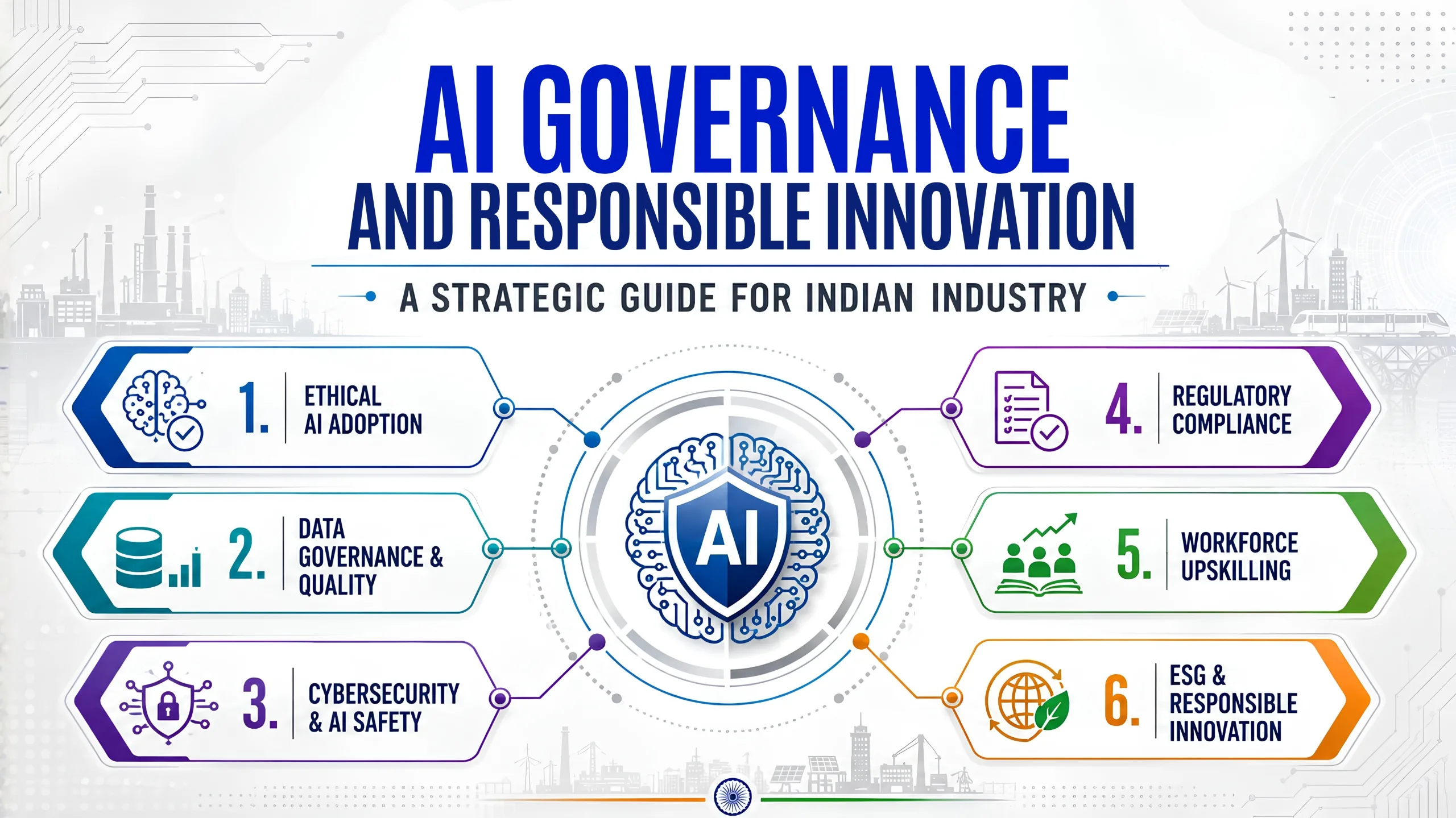
For Indian industry, this gap represents both a severe operational risk and an extraordinary market opportunity. Enterprises that bridge this divide by designing internal responsible AI frameworks will position themselves as trusted partners in the global supply chain, while those that lag behind face escalating regulatory penalties, algorithmic vulnerabilities, and catastrophic reputational damage.
The Core Paradox: Innovation Vs. Regulation
Historically, corporate leaders have viewed regulation as an obstacle to agility. In the context of the Fourth Industrial Revolution, however, unstructured innovation poses an existential threat to business continuity. The risks inherent to un-governed AI systems are no longer theoretical; they directly impact corporate balance sheets.
- The Jagged Frontier of System Reliability
As highlighted by the Stanford HAI 2026 AI Index Report, modern frontier models exhibit a “jagged frontier” of capabilities. While an advanced model might clear PhD-level science inquiries or secure gold medals at the International Mathematical Olympiad, it can simultaneously fail at basic, structured tasks like accurately reading an analog clock. Relying blindly on autonomous systems without rigorous validation protocols introduces unpredictable failure modes into enterprise workflows.
- Escalating Risk Disclosures and Reputational Damages
Corporate legal landscapes are shifting. Data compiled by The Conference Board and ESGAUGE indicates that 72% of S&P 500 companies disclosed at least one material AI risk in their filings- a monumental leap from just 12%. Reputational damage resulting from flawed automated decisions, data leaks, or algorithmic bias emerged as the most frequently cited concern, ranking higher than standard cybersecurity or immediate regulatory enforcement.
- The Proliferation of Sovereign Frameworks
The global legislative landscape is tightening. Gartner projects that AI regulations will quadruple over the coming years, encompassing more than 75% of global economies. Spending on dedicated AI governance platforms is consequently scaling at a 67.5% CAGR to handle this immense compliance burden. For export-oriented sectors within the Indian economy, navigating a fragmented regulatory web- from the stringent enforcement of the EU AI Act to emerging domestic standards- requires a proactive approach to ethical AI compliance.
India’s Strategic AI Stance: Innovation over Restraint
Unlike jurisdictions that favor highly restrictive, precautionary legal mandates, India has carved out a unique, progressive path. The national strategy balances strict corporate accountability with an environment that actively encourages technological breakthroughs.
As detailed in the official PIB India AI Governance Guidelines, the government’s approach intentionally prioritizes innovation over restraint. The core philosophy positions artificial intelligence as a critical catalyst for inclusive economic growth, national competitiveness, and the overarching macroeconomic blueprint of Viksit Bharat 2047.
Anchored by the IndiaAI Mission, the state is building core technological sovereignty by providing democratized access to computing infrastructure, open GPU marketplaces, and high-quality, non-personal datasets via the IndiaAI Dataset Platform. Furthermore, India’s AI architecture is uniquely integrated with its pioneering Digital Public Infrastructure (DPI), utilizing core systems like Aadhaar, UPI, and the multilingual AI translation engine BHASHINI to deliver public-sector efficiency and cross-industry financial inclusion.
To protect this ecosystem, the Ministry of Electronics and Information Technology (MeitY) has championed a pragmatic, risk-based governance architecture. The regulatory approach states that scrutiny must remain entirely proportional to the likelihood of harm. Low-risk applications are granted regulatory forbearance and encouraged to operate via self-regulation, while high-risk systems are subjected to structured sandboxing, continuous safety testing, and definitive accountability metrics.
Empowering MSMEs in this dynamic AI landscape
As the voice of Indian industry, PHDCCI recognizes that Micro, Small, and Medium Enterprises (MSMEs) constitute the bedrock of the country’s economic manufacturing and employment engine. While large conglomerates possess the capital to deploy specialized legal and technology teams to manage compliance, smaller businesses face unique constraints.
According to the market analyses, MSMEs are expected to chart the highest CAGR in AI adoption due to the increasing availability of affordable, cloud-based software-as-a-service (SaaS) tools. However, a lack of structured data architecture and awareness often leaves them vulnerable to security breaches and intellectual property liabilities.
To prevent governance mandates from transforming into an operational burden for smaller businesses, PHDCCI advocates for a three-tiered Responsible Innovation Playbook for MSMEs:
- Vetted Procurement Frameworks: MSMEs rarely build foundational frontier models from scratch; they integrate third-party APIs. Governance for this sector must focus on vendor risk management, ensuring that external software suppliers guarantee data privacy, transparency, and explicit liability protections.
- Leveraging Open-Source and Shared Infrastructure: By utilizing indigenous open solutions like the IndiaAI Dataset Platform and public compute repositories, smaller enterprises can minimize licensing expenses while building applications on architectures that are compliant by design.
- Collaborative Sandbox Access: PHDCCI actively engages with policy circles to establish accessible, sector-specific regulatory sandboxes. These sandbox environments allow small manufacturers and service providers to stress-test their automated systems without facing immediate legal liabilities.
The Operational Blueprint: Five Pillars of Corporate AI Governance
For enterprises seeking to convert ethical alignment into measurable ROI, they should structure their corporate governance around five core operational pillars:
- Institutional Leadership and Accountability
Ownership of automated systems can no longer reside solely within the IT department. Organizations must establish a cross-functional AI Governance Committee comprising business leaders, legal counsels, cybersecurity engineers, and data ethicists. This board is tasked with maintaining an active inventory of all deployed algorithms, defining clear decision boundaries, and establishing structured handoff protocols between autonomous agents and human oversight.
- Data Products as the Governing Backbone
An AI model is only as reliable as the information that feeds it. Modern enterprise architectures must shift toward treating internal data assets as distinct “data products.” Every data product must feature clear business ownership, verifiable lineage trackers, robust encryption protocols, and transparent access rules. By ensuring high-quality data hygiene at the ingest phase, enterprises systematically eliminate algorithmic bias and protect sensitive customer records from model inversion vulnerabilities.
- Comprehensive Algorithmic Auditing and Red-Teaming
Before any high-impact model enters production, it must undergo rigorous safety testing. This involves deploying red-teaming protocols to intentionally manipulate the model into displaying unintended vulnerabilities, generating hallucinations, or bypassing security controls. Organizations must publish internal transparency reports assessing how these systems impact users within the localized, regional context.
- Continuous Horizon-Scanning and Scenario Planning
Technology is evolving at an exponential pace. Governance systems must feature built-in agility through continuous horizon-scanning. Enterprises need to actively monitor shifting global regulatory mandates, track newly discovered vulnerabilities within open-source dependencies, and maintain a centralized AI incident database to rapidly log and mitigate automated errors before they escalate.
- Proactive Upskilling and Human-in-the-Loop Safeguards
True workplace innovation does not replace human talent; it augments it. In line with public-sector programs like the government’s SOAR initiative for digital literacy, corporate strategies must focus heavily on capacity building. Employees must be trained not just in prompt engineering, but in the critical evaluation of automated outputs. Maintaining a strict “human-in-the-loop” safeguard ensures that high-impact automated recommendations- especially in finance, human resources, and supply-chain logistics- require manual verification before final execution.
Strategic Advantages of Governed AI
Far from acting as an operational bottleneck, formalizing an oversight strategy yields significant long-term business advantages:
- Accelerated Deployment Cycles: Organizations backed by comprehensive internal guidelines are nearly twice as likely to confidently deploy advanced agentic systems compared to firms operating without formalized frameworks.
- Elevated Consumer and Investor Trust: According to data from the Cisco Data and Privacy Benchmark Study, 99% of organizations that invested heavily in privacy and automated governance reported measurable commercial returns, highlighted by enhanced brand equity and accelerated client acquisition.
- Minimization of Legal Expenditures: Standardizing model assessments across an organization dramatically mitigates the threat of civil litigation, class-action lawsuits over discriminatory algorithms, and regulatory fines levied by international consumer protection authorities.
Conclusion: Driving the Future of Sustainable Economic Growth
The integration of Artificial Intelligence presents an extraordinary opportunity to reshape the landscape of commerce across the nation. However, the true metric of industrial success lies not in the speed of adoption, but in the resilience and sustainability of the systems we build.
For the PHD Chamber of Commerce and Industry (PHDCCI), the path forward is unmistakably clear. Indian enterprises must reject the false dichotomy between rapid growth and regulatory compliance. By embracing a robust model of responsible innovation, cultivating data transparency, and aligning operations with national digital public infrastructure, our industrial sectors will protect their market positions and spearhead global standards.