


In today’s dynamic global economy, where policy decisions shape business landscapes overnight, Indian industry needs a trusted bridge between aspiration and execution. The PHD Chamber of Commerce and Industry (PHDCCI) has served as that bridge for 121 years, turning high-level policy dialogues into concrete, measurable outcomes for businesses across sectors. From pre-budget submissions that influence fiscal policy to expert committee recommendations that ease compliance burdens, PHDCCI policy dialogues deliver actionable impact for members and the broader ecosystem.
As India marches toward Viksit Bharat@2047, PHDCCI’s proactive advocacy rooted in rigorous research, stakeholder consultations, and direct government engagement has become indispensable. Whether simplifying GST for MSMEs, advancing defence indigenisation under Make in India, or shaping sustainability frameworks for net-zero goals, PHDCCI ensures industry voices are not just heard but acted upon. This article takes you inside the chamber’s ecosystem, revealing exactly how PHD Chamber of Commerce and Industry policy dialogues create tangible business value, backed by real examples, data, and mechanisms.
The Enduring Legacy of PHDCCI: 121 Years as the Voice of Indian Industry
Founded in 1905 as the Punjab Chamber of Commerce, PHDCCI has evolved into a pan-India apex body representing the “Voice of Industry & Trade.” Headquartered at PHD House in New Delhi, with regional chapters across states like Rajasthan, Uttar Pradesh, Haryana, Gujarat, and an international office in Bahrain serving six GCC countries, the chamber operates at the grassroots while maintaining national and global linkages.
PHDCCI reaches over 1,50,000 large, medium, and small industries through a diversified membership base and over 100 MoUs with national and international associations. Direct membership stood at 2,564 as of September 2025, including 216 new additions that year (7 Patron, 45 Star, and 10 Association members), generating a record membership revenue of ₹10.26 crore in FY 2024-25.
The chamber’s strength lies in its inclusive structure: expert committees, task forces, state chapters, and the in-house PHD Research Bureau (established 2010). Governments consult PHDCCI on major economic and industrial policies, with the chamber represented on more than 130 central and state advisory bodies.
This legacy of partnership has positioned PHDCCI as a catalyst for India’s progress. As Speaker Om Birla noted at the 120th anniversary celebrations in April 2025, “The long-standing journey of PHDCCI will help us achieve our goal of Viksit Bharat by 2047.” The VOICE principle (Value Creation, Opportunity, Innovation, Collaboration, and Engagement) guides this mission, ensuring every policy dialogue drives real-world progress.
What Are Policy Dialogues at PHDCCI? Defining the Process
PHDCCI policy dialogues are structured, multi-stakeholder platforms where industry leaders, experts, policymakers, and academia converge to identify challenges, propose solutions, and co-create pathways for growth. Unlike one-off meetings, these dialogues follow a disciplined cycle: issue identification through member feedback and research → expert committee deliberations → evidence-based white papers and memoranda → submission to government → follow-up advocacy and implementation tracking.
The chamber organises over 841 conferences, seminars, webinars, and meetings annually across India. The PHD Research Bureau releases more than 50 reports, papers, and newsletters yearly, plus over 450 analytical notes on socio-economic developments. Key publications include “Agriculture Boosts Economic Resilience,” “Geopolitical Spillovers and Resilience of the Indian Economy,” “Union Budget 2025-26 Analysis,” and “Viksit Bharat@2047: A Blueprint of Micro and Macro Economic Dynamics,” which projects India as a USD 34.7 trillion economy by 2047.
These dialogues cover critical domains: MSMEs, infrastructure, sustainability, defence, trade & FTAs, taxation, skill development, and emerging areas like AI, green hydrogen, and circular economy. By embedding industry insights into policy formulation, PHDCCI ensures recommendations are practical, data-driven, and aligned with national priorities like Atmanirbhar Bharat and Ease of Doing Business.
The Robust Framework: Mechanisms That Turn Dialogue into Delivery
PHDCCI’s impact stems from a multi-layered framework designed for accountability and results:
- Expert Committees & Task Forces: Sector-specific groups (e.g., Direct Taxes, Indirect Taxes, Defence & HLS, Sustainability, MSME) deliberate issues and draft recommendations. Over 130 committee meetings in recent years have shaped inputs on GST, credit access, and energy transition.
- Research-Driven Advocacy: The Research Bureau provides empirical backing. Pre-budget memoranda and post-budget analyses ensure continuous engagement. In FY 2024-25, many PHDCCI suggestions on tax rationalisation and MSME incentives were incorporated into the Union Budget 2025-26.
- High-Level Government Interfaces: Regular “call-on” meetings with Union Ministers (e.g., Amit Shah, Rajnath Singh, Piyush Goyal, Nitin Gadkari), Chief Ministers, and RBI officials. PHDCCI delegations submit sector perspectives directly.
- Multi-Stakeholder Events: Summits like the ESG & Sustainability Leadership Summit, Industry-Academia Dialogue, India-EU FTA High-Level Dialogue, and States as Drivers of Export-led Growth workshop (with NITI Aayog) translate ideas into partnerships.
- Implementation Tracking & Member Support: Post-dialogue, PHDCCI monitors outcomes through IPFCs (Intellectual Property Facilitation Centres with MSME Ministry), certification services (Certificate of Origin), and customised advisory on finance, exports, and compliance.
Spotlight on Success: Real-World Actionable Impacts from PHDCCI Dialogues
Case 1: GST Reforms – Easing Compliance for MSMEs
PHDCCI consistently advocated for rate rationalisation and inverted duty corrections. In September 2025, the GST Council approved “Next-Gen” reforms with a simplified structure (primarily 5% for essentials, 18% standard). PHDCCI welcomed these as a “big step for ease of doing business,” noting alignment with long-standing recommendations. MSMEs, contributing 31.1% to GDP, 35.4% to manufacturing, and 48.58% to exports (Economic Survey 2025-26), gained from reduced compliance burdens and aligned input-output rates. PHDCCI’s post-reform conclaves now help members implement changes seamlessly.
Case 2: MSME Credit Ecosystem Strengthening
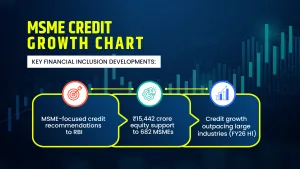
In July 2025, PHDCCI presented recommendations to RBI for MSME-specific credit cards (distinct from consumer cards), PSL status for NBFC lending, and digitalisation. These built on earlier pre-budget submissions. Outcomes include enhanced credit flow, with MSME credit outpacing large industry growth in H1 FY26. The Self-Reliant India Fund has supported 682 MSMEs with ₹15,442 crore equity.
Case 3: Defence Indigenisation & Make in India
PHDCCI’s Defence & HLS Committee organises conclaves and delegations (e.g., to Thailand). Dialogues with the Defence Ministry have boosted indigenous manufacturing, technology transfer, and MSME participation in supply chains. Ministerial addresses at PHDCCI events emphasise diversification to end monopolies and enhance ease of doing business.
Case 4: Sustainability & Net-Zero Push
The Global Summit on Sustainability and Net Zero events, in collaboration with UN GCNI and NITI Aayog, advanced ESG frameworks, green hydrogen, and carbon markets. Recommendations on circular economy and renewable energy align with India’s 2070 net-zero target and Mission LiFE. PHDCCI’s water & waste summits drive policy for industry adoption.
Case 5: Export-Led Growth & FTAs
The NITI Aayog-PHDCCI workshop “States as Drivers of Export-led Growth” and India-EU/India-Malaysia dialogues have informed FTA strategies. Tariff reductions under India-US interim agreements and bilateral pacts reflect chamber inputs on competitiveness.
These examples demonstrate how PHDCCI policy dialogues move from discussion to measurable outcomes: simplified taxes, better credit, indigenous defence capabilities, sustainable practices, and export gains- directly boosting business profitability and India’s global standing.
Empowering Businesses: Tangible Benefits for Members and the Industry
Membership with PHDCCI translates dialogues into direct advantages: access to policy intelligence via “India Inc.” bulletin, networking at 841+ annual events, certification services for exports, visa recommendations, IPR facilitation, and customised training. MSMEs benefit from credit linkages, skill programs, and global market entry via delegations. Larger firms gain from sectoral advocacy that levels the playing field. Overall, PHDCCI’s work supports India’s 7.8% GDP growth in Q1 FY 2025-26 and 7.4% FAE for FY26, fostering an ecosystem where businesses thrive amid global headwinds.
Looking Ahead: PHDCCI’s Vision for Viksit Bharat@2047
With initiatives like AI workshops, EV rallies, cooperative dialogues, and expanded chapters (Kerala, Telangana), PHDCCI is future-ready. The chamber will deepen focus on Industry 4.0, green transitions, and inclusive growth, ensuring every policy dialogue accelerates India’s journey to a developed nation.
Conclusion: Join the Dialogue, Drive the Impact
Inside PHDCCI, policy dialogues are not abstract—they are engines of actionable impact that strengthen Indian businesses, enhance competitiveness, and contribute to national prosperity. Whether you are an MSME owner navigating compliance, a manufacturer eyeing exports, or a corporate leader shaping sustainability strategy, engaging with the PHD Chamber of Commerce and Industry offers a proven platform to influence policy and unlock opportunities.