




Supply chains today are under closer watch than ever before. Buyers, investors, and regulators want to know not just what is being produced, but how it is produced and who is involved at every stage. This shift has placed responsibility across the entire supply chain, from raw material sourcing to final delivery.
At the centre of this system are Micro, Small, Medium Enterprises (MSMEs). They handle manufacturing, processing, packaging, and services that keep production moving. As expectations around ethical labour, resource use, and transparency grow, the role of MSMEs has become critical.
This article explains how sustainable supply chains work, why MSMEs matter so much, and how responsible production strengthens long-term business stability.
What Are Sustainable Supply Chains?
A sustainable supply chain ensures that goods and services are produced in a way that protects the environment, treats workers fairly, and follows ethical business practices at every stage. It looks beyond cost and speed to focus on long-term stability, responsible sourcing, and reduced harm to people and natural resources involved in production.
Why MSMEs Sit at the Core of Sustainable Supply Chains?
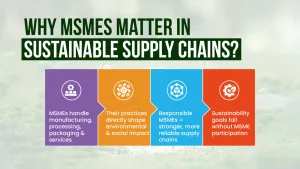
MSMEs form the operational base of most supply chains. They handle key activities such as sourcing raw materials, manufacturing components, processing goods, and providing essential services. Because of this direct involvement, their practices strongly influence the environmental and social impact of the entire supply chain. Without responsible MSME participation, sustainability goals remain difficult to achieve.
MSMEs and Local Economic Stability
MSMEs support employment across local, rural, and semi-urban areas. They provide steady income, build local supplier networks, and reduce dependence on distant production hubs. When these businesses follow responsible practices, they strengthen community well-being and improve long-term supply reliability.
MSMEs as Drivers of Operational Change
Smaller businesses can adapt faster to operational changes than large firms. Simple changes such as improving energy use, reducing material waste, or upgrading safety practices can be implemented quickly. These small shifts, when repeated across thousands of MSMEs, create a meaningful impact across supply chains.
Understanding Responsible Production in Supply Chains
Responsible production focuses on how goods are made, not just how fast or how cheaply. It looks at the impact of production on workers, communities, and natural resources. For supply chains, responsible production ensures that every stage follows fair, safe, and ethical practices that support long-term business continuity.
Environmental Responsibility in Production
This covers how resources such as energy, water, and raw materials are used. Responsible production aims to reduce pollution, limit waste, control emissions, and manage water use carefully. Even small improvements at the production level help lower the overall environmental impact of the supply chain.
Social Responsibility Across Operations
Social responsibility focuses on people involved in production. This includes safe working conditions, fair wages, reasonable working hours, and respect for worker rights. When these standards are followed, workforce stability improves and operational disruptions reduce.
Governance and Ethical Business Conduct
Governance ensures that production activities follow laws, ethical standards, and transparent processes. Clear records, honest sourcing, and fair dealing with suppliers and workers build trust across the supply chain.
Key Pillars of Responsible Production for MSMEs
Responsible production focuses on how goods are made, how people are treated, and how resources are used. For MSMEs, these pillars provide a clear structure to improve operations without adding unnecessary complexity. Each pillar supports long-term supply chain stability and buyer trust.
Circular Economy Practices
This pillar focuses on reducing waste and using materials more efficiently. MSMEs can reuse scrap, recycle by-products, or redesign processes to minimise raw material loss. Even small steps, such as better segregation or reuse of packaging, help lower costs and reduce environmental impact.
Energy Efficiency and Cleaner Production
Energy-efficient production reduces both costs and emissions. Actions like switching to LED lighting, maintaining machines properly, or improving production planning help reduce energy waste. Cleaner production also means reducing emissions, controlling pollution, and avoiding unnecessary fuel use.
Ethical Labour and Workplace Safety
Fair wages, safe working conditions, and clear work rules form the social base of responsible production. Providing safety equipment, following labour laws, and addressing worker concerns improve productivity and reduce disruptions caused by injuries or disputes.
Resource and Water Management
Responsible production requires careful use of water and raw materials. Monitoring consumption, fixing leaks, and reusing water where possible help manage scarcity risks. Efficient resource use also prepares MSMEs for stricter buyer and regulatory expectations.
Difference Between Green, Ethical, and Responsible Supply Chains
Businesses often use terms like green, ethical, and responsible supply chains interchangeably. However, each term focuses on a different aspect of sustainability. Understanding these differences helps MSMEs know what buyers actually expect and where to focus their efforts.
| Supply Chain Type | Main Focus Area | What Does It Cover? | What It May Miss? |
| Green Supply Chain | Environment | Energy use, emissions, waste, water | Labour and social issues |
| Ethical Supply Chain | Social practices | Wages, safety, worker rights | Environmental impact |
| Responsible Supply Chain | Environment, Social, Governance | Ethics, environment, compliance, transparency | Requires broader effort |
Opportunities Created by Sustainable Supply Chains for MSMEs
Sustainable supply chains do more than reduce risk. They also create clear growth opportunities for MSMEs that adapt early and consistently. Responsible practices help businesses improve market position, reduce costs, and strengthen long-term relationships.
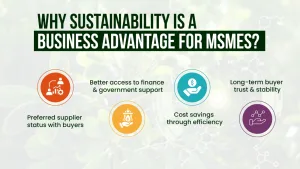
Preferred Supplier Status
Buyers increasingly favour suppliers that meet sustainability expectations. MSMEs that follow responsible practices are more likely to secure repeat orders, long-term contracts, and stable demand from large customers.
Better Access to Finance and Support
Banks and financial institutions view responsible operations as lower risk. MSMEs that follow sustainability standards often find it easier to access loans, credit lines, and government support linked to cleaner production.
Cost Savings Through Efficiency
Sustainable practices often improve efficiency. Reducing energy use, minimising waste, and managing resources carefully lower operating costs over time and improve margins.
Why Sustainable Supply Chains Matter for Business Stability?
Sustainable supply chains protect businesses from long-term risks. They help manage disruptions, improve reliability, and strengthen trust between buyers and suppliers. When sustainability is built into production and sourcing, businesses are better prepared to handle changes in demand, regulation, and external shocks.
Reducing Supply Chain Disruptions
Unsafe working conditions, resource shortages, or environmental damage can interrupt production. Sustainable practices reduce these risks by ensuring stable labour availability, better resource planning, and safer operations. This leads to fewer delays and smoother workflows.
Building Trust with Buyers and Partners
Buyers prefer suppliers who operate responsibly and consistently meet standards. Clear sustainability practices improve transparency and reduce uncertainty. This trust supports long-term partnerships and repeat business.
Challenges MSMEs Face in Adopting Sustainable Supply Chain Practices
Even when the benefits are clear, adopting sustainable practices is not simple for many MSMEs. Most challenges come from limited capacity, external pressures, and gaps in support systems rather than lack of intent.
Limited Access to Finance
Sustainable upgrades often need upfront investment in cleaner equipment, safer facilities, or better waste systems. Limited cash flow and restricted access to affordable credit make it difficult to prioritise these improvements.
Informality and Documentation Gaps
Many MSMEs operate with minimal documentation. Buyer audits and sustainability checks require basic records related to labour, safety, and compliance. Without these, businesses struggle to meet supply chain expectations.
Knowledge and Skill Constraints
Understanding sustainability standards and buyer requirements takes time and exposure. Limited technical knowledge makes it hard to identify which actions matter most and how to implement them correctly.
Exposure to External Shocks
Inflation, climate-related events, and supply interruptions affect smaller businesses more sharply. These pressures reduce the ability to plan long-term sustainability actions.
Steps MSMEs Can Take to Strengthen Supply Chain Sustainability
Strengthening supply chain sustainability does not require large investments or complex systems. Small, well-planned actions help MSMEs meet buyer expectations and improve daily operations while building long-term resilience.
Step 1: Formalise Basic Operations
The first step is ensuring all basic registrations, licences, and compliance documents are in place. Clear records related to labour laws, safety norms, and environmental approvals help during buyer checks and audits. Formalisation builds trust and reduces operational risk.
Step 2: Improve Core Production Practices
Focus on improving areas that directly affect production. This includes reducing energy waste, managing raw materials efficiently, improving workplace safety, and controlling emissions or waste. These changes often lead to better efficiency and lower operating costs.
Step 3: Align with Buyer Requirements
Instead of trying to meet every sustainability standard, focus on what key buyers expect. Ask for clear guidelines related to labour, safety, or environmental data. This targeted approach saves time and prevents unnecessary effort.
Step 4: Track Progress and Review Regularly
Maintain simple records such as energy bills, safety logs, and compliance checklists. Periodic reviews help identify gaps early and show consistent improvement when buyers or partners request information.
Conclusion
Sustainable supply chains rely heavily on MSMEs, as they carry out much of the work that turns raw materials into finished goods. Responsible production strengthens trust, reduces risk, and improves long-term stability for everyone involved. By adopting practical sustainability measures and improving transparency step by step, MSMEs can protect their place in supply chains while building resilience and credibility in an increasingly responsible production environment.
FAQs
Why Are MSMEs So Important In Sustainable Supply Chains?
MSMEs handle a large share of sourcing, processing, and manufacturing activities. Their practices directly affect labour conditions, resource use, and product quality across supply chains. When MSMEs follow responsible production methods, it becomes easier for entire supply chains to meet sustainability expectations and maintain long-term stability.
Do MSMEs Need Certifications To Be Part Of Sustainable Supply Chains?
Certifications are not always mandatory. Many buyers first look for basic compliance, clear records, and safe working conditions. Certifications can improve credibility, but consistent practices and transparency often matter more, especially for smaller suppliers at early stages of sustainability adoption.
Can MSMEs Improve Supply Chain Sustainability Without High Costs?
Yes. Many improvements involve better organisation rather than heavy spending. Managing energy use, reducing material waste, improving safety practices, and keeping proper records require limited investment. These steps often lead to cost savings and smoother operations over time.
What Happens If MSMEs Ignore Supply Chain Sustainability Requirements?
Ignoring sustainability expectations can lead to loss of buyers, failed audits, and reduced access to contracts. Over time, this can limit growth opportunities and weaken business stability as supply chains increasingly prioritise responsible and reliable suppliers.
How Can MSMEs Communicate Their Sustainability Efforts To Buyers?
Simple communication works best. Sharing basic documents, compliance records, safety measures, and improvement steps builds confidence. Regular updates and openness during audits help buyers see progress without requiring complex reports or technical language.