




Transport is one of the largest sources of carbon emissions across the world. Ships, trucks, trains, and city traffic move goods and people every day, but they also consume large amounts of fuel and pollute the air. As trade grows and cities expand, cutting emissions from transport has become a priority for governments and planners.
Green corridors address this challenge by focusing on specific, high-traffic routes where cleaner fuels, better infrastructure, and clear policies are applied together. This article explains what green corridors are, how policy and infrastructure support them, and why they matter for future transport systems.
What Are Green Corridors in Low-Carbon Transport?
Green corridors are planned transport routes designed to reduce carbon emissions by combining clean fuels, efficient infrastructure, and supportive policies. These corridors focus on routes where traffic volume is high, such as major trade lanes, freight routes, and busy urban stretches.

Green Shipping Corridors
Green shipping corridors are specific sea routes between major ports where ships use low or zero-emission fuels. These corridors support fuels such as green ammonia or green methanol and rely on coordination between ports, shipping companies, and fuel suppliers. Since shipping handles a large share of global trade, reducing emissions on these routes delivers significant climate impact.
Green Freight Corridors
Green freight corridors focus on road and rail routes used for moving goods. They include electric truck charging hubs, hydrogen refuelling stations, and electrified rail lines. These corridors help cut emissions from heavy vehicles while keeping logistics efficient and reliable.
Urban Green Transport Corridors
Urban green corridors are designed within cities to support cleaner mobility. They prioritise electric buses, cycling, walking, and low-emission last-mile delivery. These corridors also improve air quality, reduce noise, and ease congestion in dense urban areas.
Global Policy Frameworks Supporting Green Corridors
Global policies play a key role in turning green corridors from ideas into working transport systems. These frameworks reduce risk for investors, guide infrastructure planning, and push countries to move faster toward low-carbon transport.
International Climate Commitments
Many countries have committed to reducing transport emissions as part of their climate targets. Green corridors help meet these goals by focusing on routes where emission cuts can be measured clearly. By linking corridors to climate commitments, governments can justify long-term investment in clean fuels and infrastructure.
The Clydebank Declaration
The Clydebank Declaration was launched at COP26 to promote zero-emission maritime routes. Countries signing this declaration agreed to support the creation of specific shipping corridors where clean fuels and low-emission ships are prioritised. It encourages early action in shipping, one of the hardest sectors to decarbonise.
IMO Net-Zero Transport Framework
The International Maritime Organisation has set clear emission reduction targets for global shipping. Its net-zero framework aims to cut emissions by 2030 and reach net-zero by 2050. Incentives and reward mechanisms under this framework support early adoption of cleaner fuels along green shipping corridors.
EU Global Gateway and Cross-Border Funding
Large infrastructure projects often need international funding. The EU Global Gateway supports green corridor development across regions by funding clean energy supply chains and port infrastructure. Cross-border coordination under such programs ensures that green corridors work smoothly across countries rather than stopping at borders.
India’s Policy Roadmap for Green Corridors
India has placed green corridors at the centre of its transport and logistics planning. The focus is on reducing emissions on high-traffic routes while improving fuel efficiency, port operations, and city logistics. This approach links climate goals with trade growth and infrastructure modernisation.
Green and Digital Shipping Corridors
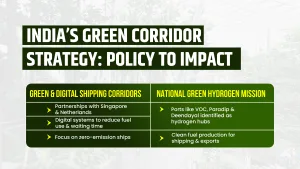
India is developing green and digital shipping corridors in partnership with countries such as Singapore and the Netherlands. These corridors aim to run zero-emission ships on selected international routes using cleaner fuels and digital monitoring to cut fuel use and waiting time at ports.
National Green Hydrogen Mission and Port Hubs
Under the National Green Hydrogen Mission, key ports like VOC Port, Paradip Port, and Deendayal Port have been identified as green hydrogen hubs. These ports will produce and supply clean fuels for shipping and export, supporting low-carbon maritime corridors.
Coastal and Inland Green Shipping Routes
India is also developing coastal green shipping routes such as the Kandla–Tuticorin corridor. These routes focus on energy-efficient vessels, cleaner fuels, and digital tracking systems to reduce emissions along domestic sea transport lanes.
City-Level Green Freight Planning
At the city level, green corridor planning focuses on freight-heavy routes. These include low-emission zones, cleaner last-mile delivery systems, and better traffic management. The goal is to reduce pollution in urban areas while keeping goods movement smooth and reliable.
Core Infrastructure Pillars of Green Corridors
Green corridors depend on strong infrastructure that supports low-carbon transport at every stage of the journey. These pillars work together to reduce fuel use, cut emissions, and improve efficiency on busy routes.
Alternative Fuel Infrastructure
Clean fuels are the foundation of green corridors. This includes electric vehicle charging stations, hydrogen refuelling hubs, and storage facilities for fuels like green ammonia and methanol. These facilities are placed along key routes and at ports so vehicles and ships can refuel without long delays. Reliable fuel access helps operators shift away from diesel and heavy fuel oil.
Shore Power and Port Electrification
Shore power allows ships to plug into the electricity grid while docked instead of running diesel generators. This cuts emissions and noise at ports. Electrified ports also support cleaner cargo handling equipment and reduce fuel use during loading and unloading operations.
Digital and Smart Transport Systems
Digital tools help reduce wasted time and fuel. Real-time tracking, smart traffic signals, and route optimisation systems improve flow and reduce congestion. In India, satellite platforms supported by the Indian Space Research Organisation help monitor movement and support just-in-time arrivals, which lower idle time and emissions.
Multimodal Transport Integration
Green corridors work best when road, rail, waterways, and ports are connected smoothly. Multimodal hubs allow goods to shift to the cleanest transport option at each stage. This reduces long road journeys, lowers emissions, and improves overall logistics efficiency.
Green National Highways Corridor Project in India
The Green National Highways Corridor Project is a major step in reducing emissions from road transport while improving highway quality. It focuses on building and upgrading highways using climate-friendly methods rather than only expanding road length.
Project Scope and Geographic Coverage
The project covers about 781 km of national highways across Himachal Pradesh, Rajasthan, Uttar Pradesh, and Andhra Pradesh. It is supported by funding from the World Bank along with government investment. These corridors were selected to test green technologies across different terrains and climate zones in India.
Use of Green Construction Technologies
Green construction methods are a core part of the project. These include cement-treated sub-bases, reclaimed asphalt pavement, and the use of local materials such as fly ash, lime, and waste plastic. Bio-engineering methods like hydroseeding and jute or coco fibre are used for slope protection, reducing erosion and material waste.
Plantation and Ecological Restoration Measures
The project follows India’s Green Highways Policy, which focuses on plantation and ecological balance along highways. Large-scale tree planting within the right of way helps offset emissions, improve roadside ecology, and reduce heat and dust. These measures ensure highways contribute to environmental recovery, not just mobility.
Measured Climate and Fuel-Saving Outcomes
Green corridors are designed to deliver clear and measurable results. Studies on India’s improved highway corridors show how better road design, traffic flow, and green practices reduce fuel use and emissions over time.
Fuel Consumption Reduction on Improved Corridors
When highways are upgraded with smoother surfaces and better alignment, vehicles use less fuel. Compared to a business-as-usual scenario, improved corridors are estimated to reduce total fuel consumption by about 19% over a 20-year period. This saving comes mainly from lower diesel use by medium and heavy commercial vehicles, which travel long distances on these routes.
CO₂ Emission Avoidance per Kilometre
New and improved highways help avoid large amounts of carbon emissions during operation. On average, each kilometre of upgraded highway can avoid over 10,000 tonnes of CO₂ over 20 years. Brownfield highway improvements show slightly higher emission savings than new greenfield routes due to smoother traffic flow and reduced congestion.
Impact of Road Quality and Traffic Flow
Better road width, surface quality, and reduced stop-and-go traffic lower fuel burn. Vehicles maintain steady speeds, which cuts emissions. Higher traffic volumes benefit the most, as small efficiency gains add up across thousands of daily trips.
Carbon Sequestration Through Green Cover
Tree plantations and compensatory afforestation along highways also absorb carbon over time. These green measures add long-term climate benefits by storing carbon and improving roadside environmental quality.
Economic and Strategic Benefits of Green Corridors
Green corridors are not only about cutting emissions. They also deliver strong economic and strategic value by improving transport efficiency, reducing long-term costs, and strengthening national competitiveness.
Emission Reduction at Scale
By focusing on busy routes with high traffic, green corridors reduce emissions where it matters most. Concentrating clean fuels and efficient infrastructure on these routes delivers a larger impact than scattered small changes. This approach helps governments achieve climate targets faster and in a measurable way.
Energy Security and Fuel Savings
Green corridors reduce dependence on imported fossil fuels by promoting electricity, hydrogen, and other clean alternatives. Lower fuel consumption over time also means cost savings for transport operators. These savings become more important as fuel prices remain uncertain.
Trade and Logistics Competitiveness
Countries that build green corridors early gain an advantage in global trade. Clean ports, efficient highways, and low-emission freight routes attract international shipping lines and logistics companies. This strengthens the country’s role as a reliable and future-ready trade hub.
Conclusion
Green corridors show how transport systems can reduce emissions without slowing economic activity. By combining clear policy, modern infrastructure, and measurable outcomes, these corridors turn climate goals into real action on the ground.
India’s progress across shipping, highways, and urban routes highlights the value of focused, route-based planning. As clean fuels and digital systems scale up, green corridors will play a central role in building efficient, low-carbon transport networks for the future.
FAQs
Do Green Corridors Support Only Electric Vehicles?
No. Green corridors support multiple low-carbon options. These include electric vehicles, hydrogen-powered trucks, cleaner shipping fuels like green ammonia or methanol, and electrified rail. The idea is to use the most suitable clean technology for each transport mode rather than relying on a single solution.
Why Are Ports So Important In Green Corridor Development?
Ports act as major fuel, trade, and logistics hubs. They are ideal locations for clean fuel production, storage, and distribution. Electrified ports and shore power systems also cut emissions from ships while docked, making ports a critical starting point for green shipping corridors.
How Do Green Highways Reduce Emissions After Construction?
Improved highways reduce fuel use by allowing smoother traffic flow and steady vehicle speeds. Better road quality lowers braking and acceleration, which cuts fuel burn. Over time, this leads to significant emission savings, especially for heavy vehicles that travel long distances.
Are Green Corridors Mainly A Climate Policy Or An Economic Strategy?
They are both. Green corridors help meet climate targets, but they also improve transport efficiency, reduce fuel costs, and strengthen trade competitiveness. By focusing on high-volume routes, they support economic growth while lowering environmental impact.